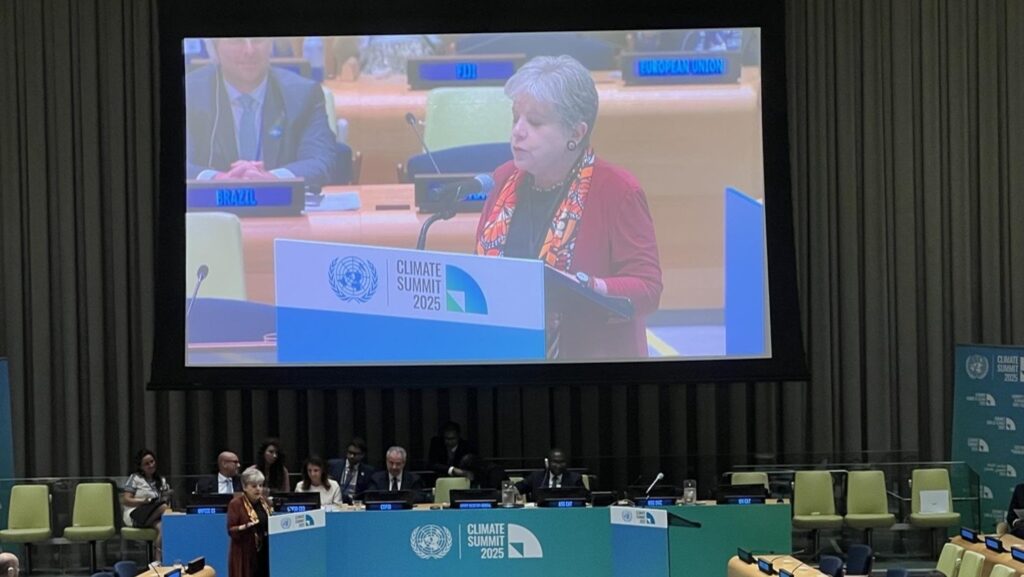
Building on the historic COP28 commitment to move beyond oil and gas, this year’s negotiations in Belém must turn ambition into action, especially for low- and middle-income, oil-producing countries most exposed to the risks of falling oil demand and price volatility. National oil companies and communities across the Global South are at the heart of this transformation. At COP30, NRGI will work to ensure the transition away from fossil fuels is just, equitable, inclusive, and orderly, shaping policies and partnerships that protect livelihoods, strengthen energy security, and empower local solutions.
Our asks
Commitment to Transitioning Away from Fossil Fuels
COP30 should launch an inclusive international process to define the principles, schedules, and support needed for a just, orderly, and equitable transition away from fossil fuels.
Transition Finance
Ensure COP30 outcomes recognize national oil company transformation as a priority financing need and create innovative funding sources, such as a solidarity levy on premium air travel, to support just energy transitions across the Global South.
Just Transition
Support the creation of a Global Mechanism for Just Transition at COP30, explicitly linked to the transition away from fossil fuels and including transition minerals, to coordinate assistance and ensure workers and communities are not left behind in the energy shift.
Nationally Determined Contributions (NDCs)
Call for further NDC revisions that close the ambition gap and reflect fossil fuel phaseout priorities in 2026, including conditional pledges from low- and middle- income producers that make Paris-aligned national oil company transformation and just transition pathways contingent on international finance.
Managing a transition away from fossil fuels in a fair and orderly way, as promised in the Dubai deal, isn’t just important — it’s existential.
Antonio Hill
NRGI Advisor
Why this matters to low- and middle-income oil and gas producing countries
Countries that depend on fossil fuel production for revenue are caught in the crosshairs of the energy transition. Continued investment in oil and coal extraction is increasingly risky as global demand declines. To build economic resilience, secure affordable energy supply, and expand their job markets, it’s in these countries’ self-interest to plan for a future beyond fossil fuels, starting now: one that is fair and leaves no one behind.
National oil companies
National oil companies (NOCs) account for about 55 percent of global oil and gas production and sit at the heart of the transition challenge. Despite the urgency of the shift beyond fossil fuels, NOCs are planning around two trillion dollars in new hydrocarbon investments. Their choices will shape both their countries’ economic futures and the world’s ability to meet climate targets.
For NOCs in low- and middle-income countries, a fair and orderly transition offers an opportunity to become engines of sustainable development rather than obstacles to it. The COP30 decision on the transition away from fossil fuels must prioritize concrete steps and international support for this transformation.
Just transition in oil producing regions
As oil demand peaks, economies and public finances built on fossil fuels face a turning point. Without proactive planning, the transition could deepen inequality and fiscal instability, particularly in countries that rely heavily on oil revenues. The impacts are often most acute at the subnational level, where jobs and local budgets depend directly on extractive activities.
This reality is already visible. In Mexico, oil-producing regions account for 90 percent of the secondary sector GDP tied to Pemex, where production is in decline. In Colombia’s Putumayo region, output has fallen from 50,000 to 22,000 barrels per day and could drop to 8,000 by 2030. In Tunisia’s Tataouine region, oil production fell by 9 percent from 2024 to 2025, even as solar capacity expands without clear plans for inclusion or justice.
Yet this moment also brings opportunity: to reimagine development, strengthen governance, and build diversified, clean energy economies. Subnational actors are already calling for realistic, funded just transition plans from their national governments and the international community. Supporting these efforts would complement global advocacy for a fair, orderly transition away from fossil fuels and help ensure no community is left behind.